
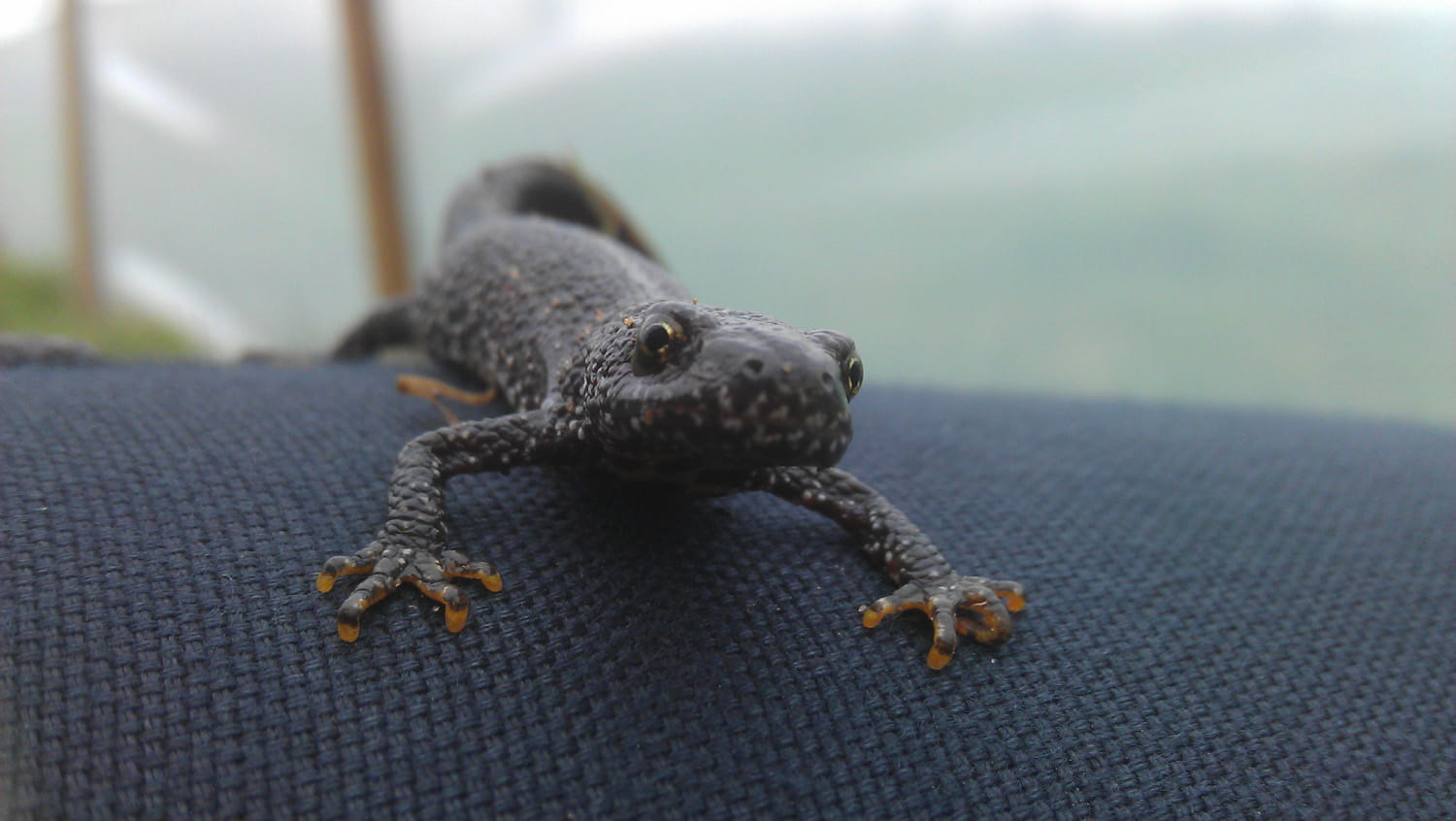
Great Crested Newt Surveys
What are Great Crested Newt Surveys?
Great crested newts are a legally protected species in the UK, with protection covering both the animals themselves and their breeding sites and resting places. As a result, development proposals that may affect ponds or suitable terrestrial habitat often require targeted surveys to assess the presence of great crested newts and to inform mitigation and licencing where necessary. Early survey work helps identify potential constraints and allows appropriate measures to be planned as part of the wider project programme.
Surveys for great crested newts are undertaken in a number of stages and the approach taken will depend on the nature of the site, the habitats present and the project proposals. Below is an outline of the typical survey process used to establish presence or absence, or to complete a full population size class assessment.

Site Survey and Habitat Suitability Index (HSI) Assessment
The first stage of GCN assessment is a site survey to identify both terrestrial and aquatic habitats. This includes assessing the application site itself and any well connected ponds located within 250 metres, and often up to 500 metres, as great crested newts regularly move between breeding ponds and terrestrial habitat over this distance.
Where ponds are identified, a Habitat Suitability Index (HSI) assessment is undertaken. The HSI is a widely used tool that evaluates the quality of habitat for great crested newts and produces a numerical score between 0 (unsuitable habitat) and 1 (optimal habitat). Our team is experienced in applying the HSI methodology and will assess all accessible ponds relevant to the survey area. Where further access is required, we will advise on this so that permissions can be sought to allow a full assessment where appropriate.
If the site survey and HSI assessment indicate suitable habitat and potential for great crested newts to be present, further surveys will be recommended to establish presence or absence and, where required, population size class.
Pond Surveys
Traditional pond surveys can be used to confirm the presence or absence of great crested newts and to establish a population size class where they are present. These surveys must be carried out during the breeding season, typically between mid-March and the end of June, and require access to all relevant ponds prior to survey commencement.
Each pond survey involves a combination of methods, where appropriate, including bottle trapping, torch searching, netting and egg searching. Surveys are undertaken during the evening and early morning to maximise detection. A minimum of four survey visits is required to establish presence or absence, with up to six visits needed to determine population size class.
Whitcher Wildlife Ltd has extensive experience delivering GCN pond surveys and holds a large stock of survey equipment, including bottle traps. Due to the nature of working in and around water, surveys are always undertaken by two ecologists to ensure safe working practices.

eDNA Sampling
Environmental DNA (eDNA) sampling provides an alternative method for assessing the presence or absence of great crested newts. Water samples are collected from ponds between mid-April and the end of June and submitted for laboratory analysis by a specialist provider. A positive eDNA result confirms the presence of great crested newts and will typically require follow-up pond surveys to establish population size class.
District Licensing
In some areas, development may be able to proceed under a district licensing scheme for great crested newts. This approach allows impacts to be addressed at a wider, strategic level, rather than through site-specific mitigation, and can reduce survey requirements and programme constraints.
Whitcher Wildlife Ltd can advise on whether district licensing is available and suitable for a site, and support clients through the process where it applies. This includes advising on survey needs, eligibility and registration, helping to ensure district licencing is integrated smoothly into the planning process.
Why choose Whitcher Wildlife for Great Crested Newt Surveys?
Whitcher Wildlife Ltd has extensive experience across all aspects of great crested newt surveying, mitigation and licencing. Most of our team hold licences enabling us to undertake GCN surveys across England, Scotland and Wales, and our senior ecologists hold European Protected Species Mitigation licences for great crested newts. This allows us to support projects through lawful exclusion works and the delivery of appropriate mitigation, ensuring compliance while helping projects progress efficiently.